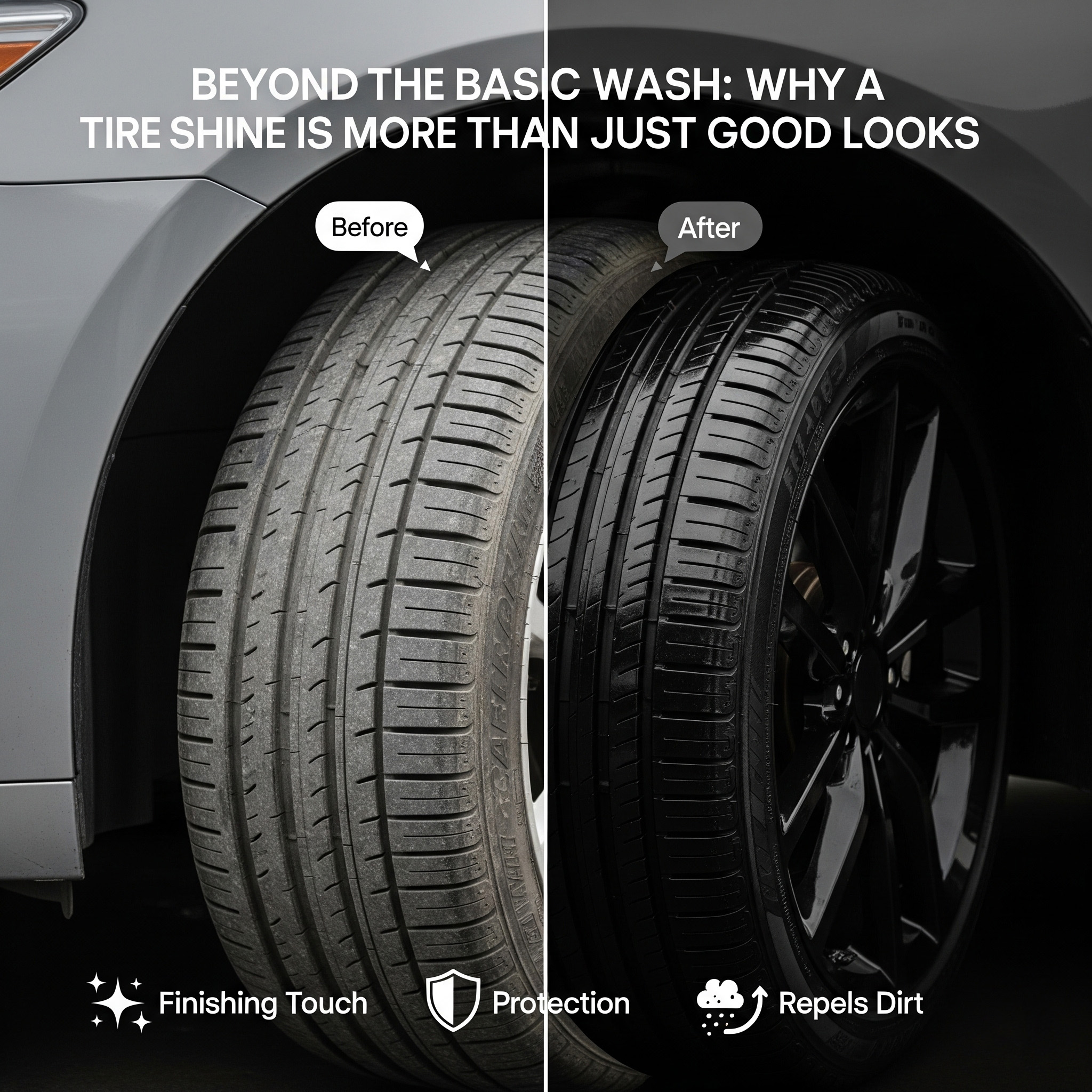
The gleaming paintwork, the sparkling chrome, the pristine glass – every car enthusiast knows the thrill of a meticulously clean vehicle. Yet, for many, the final touch, the foundation upon which the entire aesthetic rests, often goes overlooked: the tires. Neglected tires can detract significantly from even the most polished car, appearing dull, faded, and prematurely aged. This is where the magic of tire shine comes in, transforming mundane rubber into a striking element of your car's overall presentation. But the appeal of a glossy "wet look" is just the beginning. Beyond the immediate visual pop, a quality tire shine product offers critical protection and conditioning, playing a vital role in extending the life and maintaining the health of your tires.
The Allure of the "Wet Look": More Than Just Aesthetics
At its core, tire shine is an automotive detailing product designed to enhance the appearance of your tires. It's what gives them that deep, dark, often glossy finish that makes them look new, refreshed, and sometimes even "wet." But what exactly is it, and why has it become an indispensable part of exterior car care?
What Exactly is Tire Shine?
Tire shine, often referred to as tire dressing or tire protectant, is a liquid or gel applied to the rubber sidewalls of your vehicle's tires. Its primary function is to restore the rich black color that tires lose over time due to exposure to the elements and road grime. It then adds a protective layer that leaves a desired finish – from a subtle, natural satin to a deep, intense high gloss. These products are typically formulated with silicones, polymers, and various conditioning agents that penetrate and adhere to the rubber, creating the desired visual effect and offering underlying benefits.
The Immediate Visual Impact
There’s no denying the immediate visual upgrade that a good tire shine provides. Imagine a freshly washed car with gleaming paint. Now, picture it with dull, brown, or grayish tires. The contrast is stark. Apply a quality tire shine, and suddenly the entire vehicle looks more complete, more "finished." The tires become a statement, framing your wheels and adding a touch of aggression or sophistication, depending on the desired look. For car show enthusiasts, it’s a non-negotiable step to achieve that award-winning presentation. For daily drivers, it simply adds a touch of pride and makes the vehicle look well-maintained and cared for. It’s the difference between a good detail and a spectacular one, truly bringing out the best in your car’s exterior.
Beyond the Gloss: The Crucial Protective & Conditioning Benefits
While the aesthetic appeal is undeniable, the true value of tire protection and conditioning extends far beyond mere surface beauty. Modern tire shine products are engineered to provide vital care that contributes to the longevity and safety of your tires.
Guarding Against the Elements: UV, Ozone, and Environmental Damage
Your tires are constantly under attack from a barrage of environmental aggressors. The sun's UV rays are notorious for causing rubber to dry out, fade, and eventually crack – a process known as "dry rot." Ozone, a component of smog, also accelerates rubber degradation. Road grime, brake dust, salt, and various chemicals encountered on the asphalt can further strip the rubber of its natural oils and protective compounds. Quality tire shine products act as a sacrificial barrier, shielding the rubber from these damaging elements. They often contain UV inhibitors that block harmful rays, much like sunscreen for your tires, and other agents that resist ozone cracking, helping to preserve the integrity of the rubber compound.
Preventing Premature Aging: Cracking and Fading
Neglecting your tires leaves them vulnerable to premature aging. Over time, without proper care, tires can lose their elasticity, becoming brittle and prone to micro-cracks on the sidewalls. This isn't just an aesthetic issue; deep cracks can compromise the structural integrity of the tire, leading to potential safety hazards. The fading and browning of tires are also direct indicators of this degradation. Tire shine, particularly those with conditioning properties, helps to nourish the rubber, keeping it supple and flexible. This ongoing conditioning is vital in preventing the drying out that leads to cracking and maintains the rich, black appearance for longer, ensuring your tires not only look good but also remain healthy.
Maintaining Rubber Health and Flexibility
The rubber compound of a tire is complex, designed to provide grip, absorb shock, and withstand immense forces. To perform optimally, this rubber needs to remain flexible and hydrated. Think of it like your skin – if it dries out, it becomes flaky and prone to damage. Similarly, dry tires lose some of their pliability, which can affect ride quality and even handling characteristics. Tire conditioners work by infusing the rubber with agents that restore essential oils and keep the material hydrated. This helps maintain the rubber's designed flexibility, which is crucial for the tire to perform as intended throughout its lifespan. It’s an investment not just in appearance, but in the functional life and safety of a critical vehicle component.
Choosing the Right Tire Shine: Water-Based vs. Solvent-Based
Not all tire shine products are created equal. Understanding the fundamental differences between water-based and solvent-based formulations is key to making an informed choice that suits your needs and protects your tires.
Understanding the Differences
Water-Based Tire Shine: These products are typically formulated with natural oils, polymers, and conditioners suspended in a water emulsion.
- Pros: Generally safer for your tires as they don't contain harsh petroleum distillates; less prone to "sling" (product flinging onto paintwork); easier to clean up; often provide a more natural, satin, or matte finish. They nourish the rubber without drying it out over time.
- Cons: May not last as long as solvent-based options, especially in wet conditions, requiring more frequent application for consistent results.
Solvent-Based Tire Shine: These formulations use petroleum distillates or other solvents as a carrier for silicones and other polymers.
- Pros: Known for delivering a very high-gloss, deep "wet" look; incredibly durable and long-lasting, even through rain.
- Cons: Can potentially dry out rubber over time with prolonged use due to the harsh solvents, leading to browning or cracking; much more prone to "sling" onto painted surfaces, which can be difficult to remove; often have a stronger chemical odor.
Factors to Consider When Selecting a Product
When standing in the automotive aisle, consider these points to pick the best tire shine for your vehicle:
- Desired Finish: Do you prefer a subtle, natural satin look, or are you aiming for maximum gloss and depth? Your preference will dictate the product type.
- Durability: How long do you want the shine to last? If you detail frequently, a water-based product might be fine. For maximum longevity between applications, a solvent-based product might be appealing, but consider the potential long-term effects.
- Safety for Tires: For long-term tire health, many experts recommend water-based products due to their gentler nature and conditioning properties.
- Sling Potential: If you drive immediately after application, or simply dislike cleaning product residue from your fenders, opt for water-based or gel formulas that adhere better.
- Environmental Impact: Water-based products are generally considered more environmentally friendly due to the absence of harsh solvents.
Mastering the Application: Tips for a Flawless Finish and Maximum Protection
Achieving that perfect, long-lasting tire shine isn't just about the product; it's also about the process. Proper application is crucial for maximizing both the aesthetic appeal and the protective benefits.
Preparation is Key: The Foundation for Success
You wouldn't paint over a dirty wall, and the same principle applies to your tires. Proper preparation is the most critical step and often the most overlooked.
- Thorough Cleaning: Before applying any tire shine, your tires must be impeccably clean. Use a dedicated tire cleaner and a stiff brush (not your paint brush!) to agitate and remove all old dressing, brake dust, road grime, and any browning from the rubber. Rinse thoroughly until no brown suds appear. This step ensures that the new product can bond directly with the rubber, providing maximum durability and a true, deep finish.
- Complete Drying: Allow the tires to dry completely. Excess water can dilute the tire shine, leading to uneven application, streaking, or reduced longevity. You can speed up the process with a leaf blower or a dedicated car drying towel.
Application Techniques
Once your tires are clean and dry, you're ready to apply the shine:
- Use the Right Applicator: Dispense a small amount of tire shine onto a foam applicator pad or a microfiber applicator. Avoid spraying directly onto the tire if possible, as this can lead to overspray on wheels and paint.
- Apply Thinly and Evenly: Work the product into the tire sidewall in a thin, even layer. Less is often more. Over-applying can lead to a greasy look and increased sling.
- Wipe Off Excess: After applying, use a separate, clean microfiber towel to lightly buff off any excess product, especially in grooves and lettering. This helps ensure an even finish and significantly reduces the chances of "tire sling."
- Allow Drying Time: Give the product time to cure or set, especially with solvent-based options. Follow the manufacturer's recommendations, but typically 15-30 minutes before driving is a good rule of thumb.
- Masking (Optional but Recommended): For solvent-based, high-sling products, you might consider covering your wheels with tape or a cardboard barrier to prevent accidental contact with the product.
Preventing "Tire Sling"
Tire sling – when the product flings off the tire onto your car's paintwork or fenders – is a common annoyance. To minimize it:
- Use Less Product: Apply thin coats.
- Wipe Thoroughly: Always wipe off excess product after application.
- Allow Cure Time: Wait for the product to dry completely before driving.
- Consider Water-Based: These products are inherently less prone to sling.
Ultimately, a proper application technique will not only deliver a stunning visual result but also ensure that your tires benefit fully from the protective and conditioning agents within the product.
In conclusion, treating your tires to a quality tire shine and protectant is far more than a frivolous cosmetic step. While the instant gratification of a deep, dark, glossy finish is certainly appealing, the real value lies in the comprehensive protection and conditioning it provides. By shielding your tires from the damaging effects of UV rays, ozone, and road contaminants, you actively prevent premature aging, cracking, and fading. Investing in the right tire products and employing proper application techniques ensures your tires remain healthy, flexible, and looking their best, enhancing both the aesthetic appeal and the long-term integrity of your entire vehicle. So, next time you detail your car, remember: the shine on your tires is a testament not just to beauty, but to smart, holistic car care.